The phone meeting with the doctor at the Seaver Center for Autism at Mount Sinai Medical Center, had been arranged a week earlier. The doctors assistant had call my wife, Kristin, and they had set up the time for the doctor to discuss some recent genetic testing on our daughter. We had already heard from them a few months ago that her genome looked fine and that they hadn’t found any mutations that were the cause of her autism. So, we had assumed the phone call was about a drug study that we were waiting to enroll our daughter Emmaline in.
At the appointed time, the phone rang. After the formalities of saying hi, etc., the doctor asked if my wife was also on the line. “No,” I casually told him, “she’s leaving for a PT appointment. She tore her MCL and ACL ice skating.” The doctor seemed a little taken aback, I wondered why. It seemed like no big deal. Apparently the assistant had asked that we both be on this phone call. I wasn’t aware of that detail, however. “Well, o,k,” he finally says. And he dived in. After the first results came back, they ran another more detailed study of Emmaline’s DNA. They had found a deletion on one of her X chromosomes. “She has Rett Sydnrome,” he told me. “I’m sorry, I know how upsetting this must be to hear.” Upsetting? Why? I don’t even know what Rett Syndrome is, I’m thinking. How bad can it be? She seems mostly fine. I mean, yes, she’s almost five and can’t talk, has some motor difficulty, hasn’t made the progress everyone always say she’ll make yet. But we’ve got her in a great school for children with autism. She gets therapy at home six days a week as well. We are doing everything we can to help her. Surely she’ll start making progress soon.
It’s a random mutation he tells me. Very rare. About one in 15,000 to 20,000 girls get it. Males don’t have it because it is fatal for them. “What?”
I get off the phone and walk upstairs and sit on the bed with the computer and Google “Rett Sydnrome”. I read the first site that comes up. It lists four stages: Early onset, rapid destructive phase, plateau or pseudo-stationary stage and the motor deterioration phase. I can’t take it all in. Suddenly, I can’t breathe or reason. All I can think is that my daughter is going to die. I start crying. Sobbing. My youngest daughter Annabeth, looks upset. I run from the room, so she won’t see me fall apart. After a while I gather myself together, go back into the bedroom and continue reading. I go to another website. This one, http://www.Rettsydrome.org. This website gives an approximate timeline for the progression of the disease. O.k. Not as bad as I first thought. My daughter is not going to die from this immediately. Possibly not even for decades. She might even be past the destructive phase, so perhaps she won’t get worse for a few years. maybe even a decade or two. But she won’t get better either. She’s not going to “come out of it” like some children with autism do. She’s probably not ever going to talk. I will never hear her say “Daddy”. After years of hoping that she would eventually get “better,” I now have no hope. She won’t.
Kristin came back from her PT and walked into the room to see tears still falling down my face. I can’t talk. So I instead turn the computer to her. She takes it in with far more stoicism than I do. Or perhaps denial. Things hit me immediately. Possibly my “artistic temperament” as my mom was always ‘fond’ of calling it when I was growing up. Kristin, the scientist, usually has things percolate for a while. But I always see the pain there – even if she’s not fully aware of it herself. Annabeth says she’s hungry. She asks for mac and cheese. It’s already lunchtime. Kristin tells her we’ll go down and make her some. “Not Dad,” Annabeth says. “Daddy’s tears will get my mac and cheese all wet!”
I didn’t want to go to church this past Sunday. I really wanted to stay home and not face people at all. But I’m the bishop. If people need assistance, I’m supposed to be there to help. If they need counsel, I’m supposed to offer wisdom, kind words – and perhaps a bit of love. I can’t possibly do any of this, I think. We go. It’s fast Sunday, but thankfully, I am not conducting. We have many wonderful people in our ward (a term for a Mormon congregation). And on fast Sunday, they each have the opportunity to walk up to the pulpit and to share thoughts and feelings about the gospel if they so choose. One of these members whom I know quite well, get’s up. He’s in the later years of life. He’s had serious back problems for years. He has diabetes. Heart problems. He’s losing his hearing, his eyesight. He walks slowly, haltingly, with a cane. He get’s to the pulpit, smiles like always. “I smile” he says, “because I am so grateful. I am grateful for life.” He’s grateful for his wife, his children, his grandchildren. He’s grateful that many years ago he found the gospel. And he means it. I know he does. It’s not an act.
Recently, I sat in my bishops office counseling with a member of our ward. One of our topics was tithing. The biblical principal of donating ten percent of one’s increase or income. We talked of sacrifice. Of Abraham being asked to sacrifice his son. That sacrifice sanctifies us. It builds us. Willing sacrifice brings us closer to God. I mention that thankfully, God doesn’t ask us to sacrifice our children as he did Abraham. I sit on the stand and think of this conversation. And realize that often He does ask us to make the same sacrifice as Abraham. I had spent the last couple of days being very angry at God. (I still am.) But I realized that forgiving Him and accepting what is – and having gratitude like this older church member – is a sacrifice. It requires me to place all my trust in Him – as did Abraham. I’m not quite there yet. Not sure I will be for some time. Not sure I will be when Emmaline’s motor deterioration phase comes. But I will try, since honestly, what choice do I have anyway?
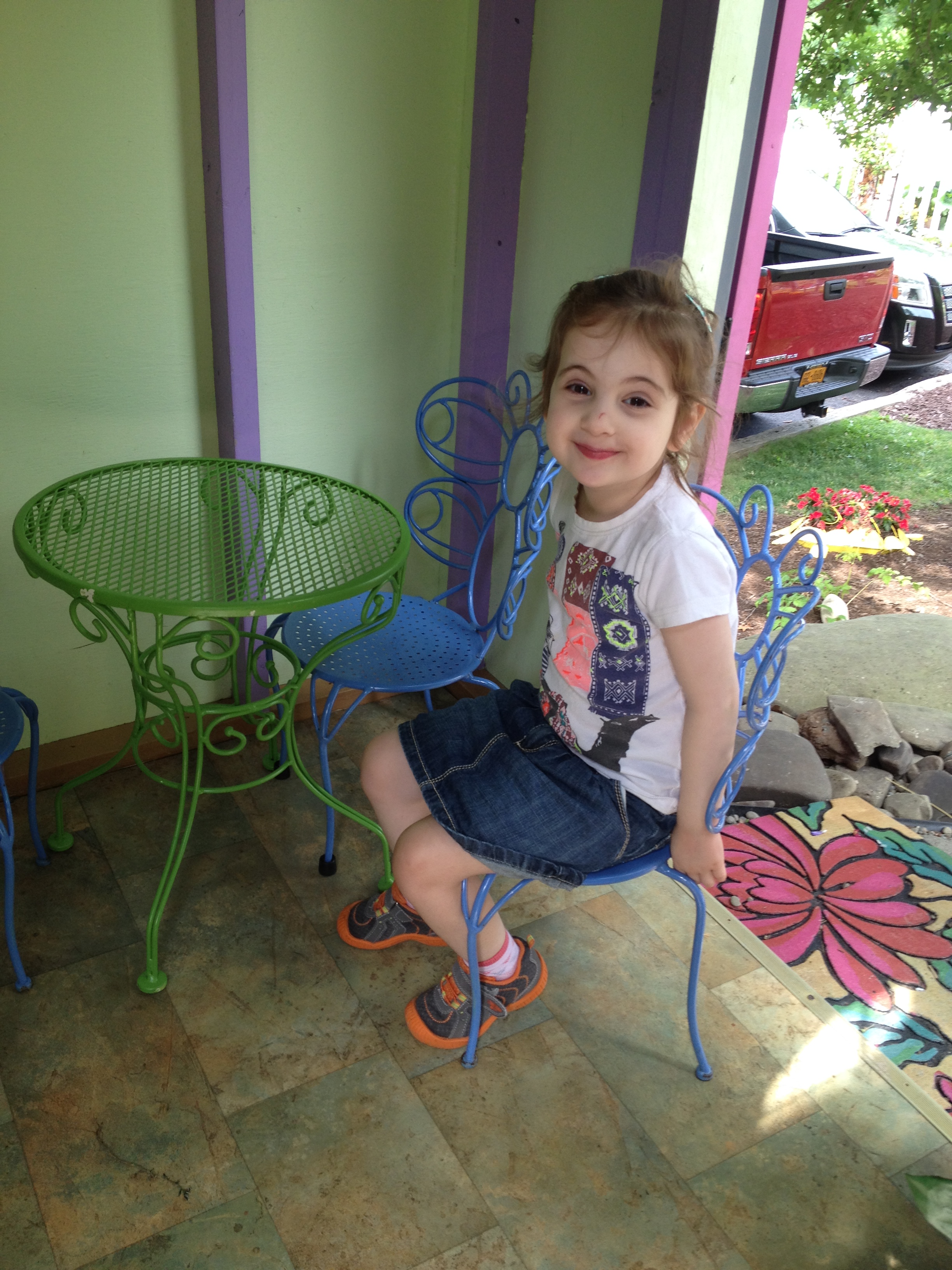
Emmaline will turn 5 on Thursday. For those contemplating a gift, donations to RettSyndrome.org would be most appropriate.

 the harried househusband